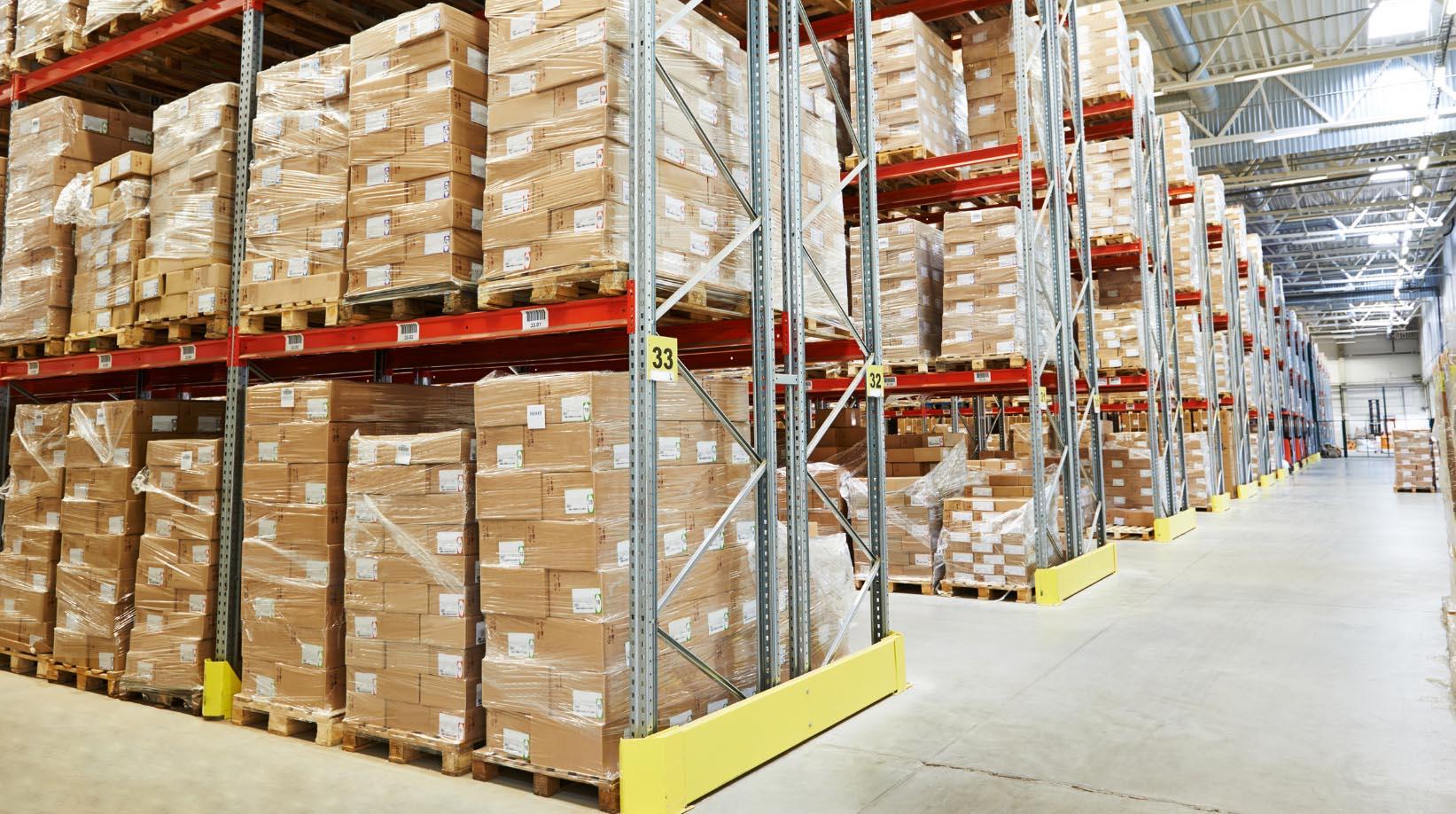
At first glance, warehouse management may seem simple:
“Goods arrive, are stored, and then shipped out.”
In reality, things are rarely that straightforward.
What truly makes a warehouse efficient is smart design, accurate data, and principles that actually work on the shop floor.
Here are the 10 core principles of modern warehousing that genuinely make a difference:
1. Reducing material handling is the golden rule
The biggest burden in warehouses is unnecessary handling.
On average, a single item is handled 7–8 times.
If this number can be reduced to 3–4 touches, speed, cost efficiency, and error rates improve significantly.
The rule is simple:
The fewer the touches, the healthier the operation.
2. Product flow should be as smooth as water
Material flow inside the warehouse should be uninterrupted—no backtracking, no chaos.
A well-designed flow:
Receiving → Putaway → Picking → Shipping
reduces congestion, waiting times, and excessive walking.
Think of the warehouse as a living organism:
every bottleneck affects the entire system.
3. Inventory must be stored in the right location
The location of each product should never be random.
Placement must be planned based on access speed, turnover rate, and operational workload.
Two common approaches stand out:
-
Velocity-based zoning
Products are classified as fast-, medium-, or slow-moving and placed accordingly.
Fast movers are located closest to operators and loading docks.
This reduces walking distances and increases picking speed. -
Non-zoned / standard layouts
No fixed locations are assigned; products are placed wherever space is available.
In highly automated environments, velocity-based zoning may not be necessary,
the system already retrieves products from the optimal location.
Even within the same warehouse, both approaches can coexist:
manual areas may use velocity zones, while automated areas follow a standard layout.
4. The right stock level leads to the right decisions
Determining inventory levels requires more than just sales velocity.
Internal warehouse movement—how often an item is handled—is equally critical.
A slow-selling product with high internal movement can become a major problem if overstocked.
5. An efficient working system must be established
True warehouse performance is revealed during regular working hours.
Key measurements are simple:
-
Lines picked per hour
-
Performance comparison between regular hours and overtime
If productivity is low during regular hours but high during overtime,
this is a clear efficiency problem.
With proper planning, overtime can be reduced, generating substantial labor cost savings.
6. Benchmarking is essential for improvement
A warehouse that doesn’t benchmark itself against the industry cannot improve.
For an effective benchmark, 5–6 metrics are usually sufficient:
-
Picking productivity per hour
-
Productivity during direct operational hours
-
Productivity based on total warehouse working hours
-
Annual total warehouse working hours vs. annual warehouse costs
-
Warehouse cost per total workforce
These metrics clearly answer the question:
“Are we performing well, or are others doing much better?”
7. Choosing the right handling system is a mathematical decision
The level of mechanization should be determined based on a matrix of:
Storage volume + number of SKUs
-
Low volume + low SKU → simple manual systems
-
As volume and SKU count increase → mechanization must increase
One of the most expensive mistakes is letting the warehouse grow while the system stays the same.
8. Knowing data is not enough—interpreting it correctly matters
Warehouse design should never be based on averages.
Average values are misleading.
What truly matters:
-
Peak periods
-
Low-demand periods
-
Variability and fluctuations
The design must be capable of handling all of these scenarios.
9. In WMS selection, the right solution beats the lowest price
A WMS is the brain of the warehouse.
The right choice must match operational complexity and cover these core functions:
-
Warehouse design
-
Inventory tracking
-
Receiving
-
Putaway
-
Picking
-
Shipping
-
Labor management
-
Dock & yard management
-
Reporting
10. Everyone who impacts the warehouse must be involved
Every stakeholder interacting with the warehouse has valuable input:
-
Sales
-
Planning
-
Production
-
IT
-
Procurement
-
Order management
-
Operations
-
Human Resources
-
Customer Service, etc.
A warehouse designed without broad collaboration will face problems when it meets reality.
More perspectives mean a stronger design.
Conclusion: A warehouse is not just space—it is a strategic asset
Warehouses directly determine a company’s costs, speed, customer satisfaction, and competitive advantage.
That’s why changes that may look like “simple racking adjustments” can sometimes elevate a company to an entirely new level.
The right design + the right processes + the right technology + the right collaboration
transform warehouses from cost centers into value-creation hubs.